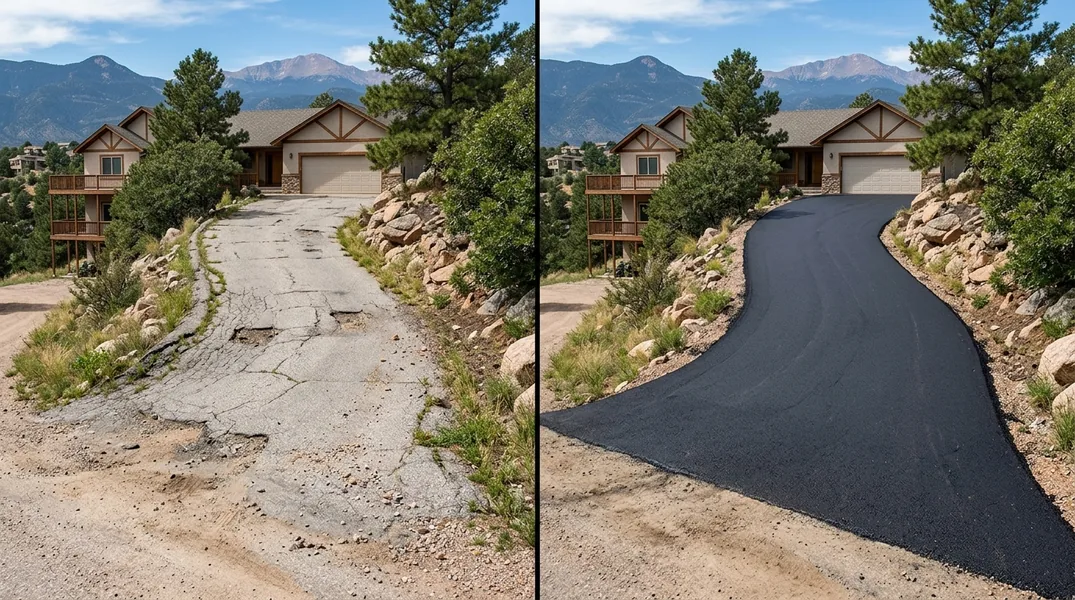
Understanding Colorado Springs Clay Soil and Driveway Challenges
Colorado Springs sits on challenging terrain. Much of the region's soil composition includes dense clay that expands when wet and contracts when dry, creating significant stress on driveways year-round. This natural cycle is one of the biggest threats to driveway longevity in the area, regardless of whether you choose asphalt or concrete.
Clay soil movement is particularly problematic during Colorado's spring snowmelt and after heavy summer rains. When moisture penetrates the soil beneath your driveway, the clay swells, pushing upward and causing cracks, heaving, and buckling. Conversely, during dry periods (which are common in Colorado Springs), the clay shrinks, leaving voids underneath that allow your driveway surface to settle unevenly. Understanding this foundation issue is critical before deciding between asphalt and concrete, because the wrong choice can lead to premature failure and costly repairs.
Asphalt vs Concrete Driveway: How They Handle Clay Soil
When comparing asphalt vs concrete driveway options, both materials have distinct advantages and limitations when installed over clay soil. Concrete is rigid and inflexible, which means it cannot absorb the movement caused by clay expansion and contraction. As the soil shifts beneath a concrete driveway, the slab cracks, typically in a spider-web pattern or along stress lines. Once concrete cracks, water seeps in, freezes during Colorado's cold winters, and accelerates deterioration. Repairing concrete is also expensive, often requiring full section replacement rather than simple patching.
Asphalt, by contrast, is flexible and slightly elastic. This flexibility allows a Asphalt Driveway Paving & Installation to move with minor soil shifts without immediately cracking. The material can accommodate slight settling and expansion without the catastrophic failure seen in concrete. This flexibility, combined with asphalt's lower initial cost, makes it the more practical choice for homeowners in areas with aggressive clay soil like Colorado Springs. However, asphalt does require more frequent maintenance to extend its service life and prevent water penetration that could eventually damage the base layers.
Asphalt Over Concrete Driveway: Can You Layer Asphalt?
Some homeowners ask whether they can simply install asphalt over an existing concrete driveway to avoid the cost and hassle of removal. While asphalt over concrete driveway installations are technically possible in certain situations, this approach comes with significant caveats in Colorado Springs. If the concrete is already cracked or heaving due to clay soil movement, layering asphalt on top will not solve the underlying problem. The asphalt will eventually crack and fail in the same places as the concrete beneath it, because the root cause (soil movement) remains unaddressed.
Additionally, asphalt requires a stable, well-draining base to perform optimally. Concrete does not provide adequate drainage, and water can become trapped between the layers, accelerating deterioration. If you do proceed with asphalt over concrete, the concrete must be in excellent condition, properly cleaned, and treated with a bonding agent. For most homeowners in Colorado Springs dealing with clay soil issues, complete removal and professional Asphalt Driveway Paving & Installation with proper base preparation is the more reliable long-term solution. A qualified contractor can assess your specific situation and recommend the best approach during a free estimate.
Asphalt Driveway Lifespan in Colorado Springs: What to Expect
The asphalt driveway lifespan varies depending on installation quality, maintenance, and local climate conditions. In ideal conditions with proper care, asphalt typically lasts 15 to 20 years. However, in Colorado Springs, where clay soil movement, freeze-thaw cycles, and intense UV exposure are constant challenges, you may see a lifespan closer to 12 to 18 years. The good news is that asphalt is far easier and more affordable to maintain than concrete, which means you can extend its life through proactive care.
Regular seal coating every 2 to 3 years is the single most important maintenance step for Colorado Springs homeowners. Seal coating protects asphalt from UV damage, water penetration, and oxidation, significantly extending its service life. Additionally, prompt attention to small issues like potholes or cracks prevents them from expanding into larger, more expensive problems. Pothole Repair & Asphalt Patching is affordable when done early, but neglected damage eventually requires Asphalt Resurfacing & Overlay or complete replacement. By staying on top of maintenance, many Colorado Springs homeowners successfully extend their asphalt driveway lifespan to 20 years or beyond.
Blacktop Driveway Cost and Maintenance in Colorado Springs
A blacktop driveway (asphalt) typically costs less to install than concrete, with pricing generally ranging from $3 to $6 per square foot depending on site conditions, base preparation, and local market rates. For a typical 500-square-foot driveway, you can expect installation costs between $1,500 and $3,000. Concrete, by comparison, usually runs $4 to $8 per square foot, making it 30 to 50 percent more expensive upfront. Over the life of your driveway, however, the total cost of ownership favors asphalt when you account for maintenance and repair expenses.
Annual maintenance for a blacktop driveway is minimal and affordable. Seal coating costs roughly $0.50 to $1.50 per square foot every few years, and minor pothole repairs run $100 to $300 per occurrence. Concrete, on the other hand, requires expensive crack repair, sealant reapplication, and often full-section replacement once significant damage occurs. In Colorado Springs, where clay soil creates ongoing stress on driveways, the flexibility and repairability of asphalt make it the more economical choice over the long term. Contact Colorado Springs Asphalt Paving at (719) 355-8474 to discuss your specific driveway needs and get a detailed free estimate for your project.
Making the Right Choice for Your Colorado Springs Home
Choosing between asphalt and concrete for your Colorado Springs driveway ultimately depends on your priorities, budget, and tolerance for maintenance. If you value lower upfront cost, flexibility with clay soil movement, and the ability to repair damage affordably, asphalt is the clear winner. If you prefer a durable, low-maintenance surface and are willing to invest more initially, concrete may appeal to you, though it carries higher long-term risk in clay soil areas.
The most important step is having a professional assessment of your specific property. Soil conditions, drainage, and existing damage all influence the best solution for your driveway. Colorado Springs Asphalt Paving has years of experience installing and maintaining driveways in challenging clay soil conditions throughout the region. Our team can evaluate your site, explain your options, and recommend the approach that will serve your home best. Whether you need new Asphalt Driveway Paving & Installation, Driveway Repair, or advice on maintaining your existing surface, we are here to help. Call us today at (719) 355-8474 or visit our website to schedule your free estimate and take the first step toward a durable, reliable driveway.
Looking for a professional asphalt paving contractor in Colorado Springs? Colorado Springs Asphalt Paving responds fast for all your asphalt paving needs.
Get a Free Quote