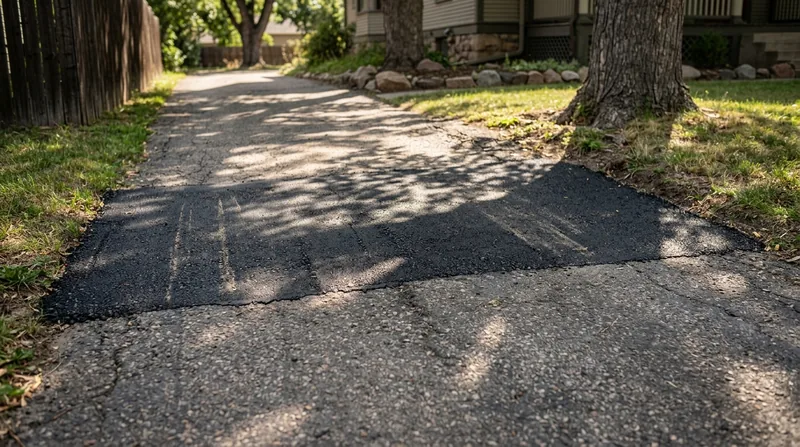




Colorado Springs driveways live under extraordinary stress. Bentonite clay beneath the soil swells when wet and shrinks when dry, heaving the asphalt above it into cracks that run the length of the slab. Freeze-thaw cycles, we get thirty inches of frost depth and dozens of thaws each winter, work those cracks deeper. Summer UV oxidizes the surface while hailstorms pit it. When you need driveway repair in Colorado Springs, the fix has to address the root cause: the base. We cut out the failed asphalt, rebuild the base where the clay has moved, and patch with hot mix so the repair holds through the next cycle. This is not cosmetic work. It is the difference between a patch that lasts three years and one that fails by next spring.
Why Driveway Repair Matters in Colorado Springs: Clay, Frost, and Base Failure
A crack in your asphalt is not just a surface problem. In Colorado Springs, it is the first sign that bentonite clay underneath is moving. Water gets into that crack, freezes, expands, and pushes the slab higher. The next thaw drops it unevenly. After a few cycles, the slab settles into a depression, water pools there, and the asphalt around the low spot breaks apart into alligator cracking. Once that pattern starts, patching the surface alone throws money away. The real repair happens below the asphalt.
- We remove the failed asphalt section and inspect the base for movement or erosion caused by clay heave or water infiltration.
- We rebuild the base with compacted aggregate, proof-roll it, and verify it will not settle under weight before we pour new asphalt.
- We install new hot mix asphalt to proper thickness and edge-compact it so the repair bonds to the existing driveway and resists the next freeze-thaw cycle.
- We verify drainage so water does not pool at the repair edge and restart the cycle.
Catching a crack early and repairing it properly can extend your driveway by years and save you from the cost of full resurfacing or replacement.
Key info: In neighborhoods like Old North End and Broadmoor, Victorian and mid-century homes sit on narrow lots with driveways laid decades ago over whatever base was convenient. Those driveways are especially vulnerable to clay heave because the original base was often thin or poorly compacted. If your driveway is more than fifteen years old and you see longitudinal cracks running the length of the slab, the base has likely moved. Repair now, not later.
For more on what happens when cracks spread across the entire surface, see our page on asphalt resurfacing and overlay.
You can also verify driveway regulations and permit requirements for your specific municipality through your local building department or HOA, as rules vary across El Paso County and the towns within it.
How We Repair Colorado Springs Driveways: Step by Step
Driveway repair in Colorado Springs follows a proven sequence. We do not just fill cracks. We cut out the failed section, rebuild what is underneath, and install new asphalt that will not fail the same way. The process takes one to two days depending on the size of the repair and the base condition. Colorado 811 utility locates are required by law before any excavation, and we handle that step.
- We measure the repair area and document what we find: crack pattern, base condition, drainage, and any signs of clay heave or settling.
- We call Colorado 811 to locate utilities so we do not cut into gas, electric, water, or fiber lines during excavation.
- We cut out the failed asphalt with a clean edge, typically four to six inches deep, and remove the debris.
- We inspect and prepare the base, removing soft or displaced material and adding compacted aggregate if the base has settled or eroded.
- We proof-roll the base to confirm it will support traffic without further settling.
- We install new hot mix asphalt at proper thickness (typically two to three inches for a driveway) and edge-compact it thoroughly.
- We verify the repair sheds water and does not create a low spot where standing water can pool.
The repair is complete and ready for traffic the same day in most cases, though we recommend avoiding heavy loads for the first 24 hours while the asphalt cools and sets.
Real example: A homeowner in Manitou Springs had a three-foot crack running the length of her driveway apron, with the asphalt on one side of the crack sitting a half-inch lower than the other. We cut out the failed section, rebuilt the base with six inches of compacted aggregate, and installed new asphalt. The repair cost $680 and took one day. Had she waited another year, the crack would have spread into alligator cracking across fifteen percent of the driveway, and we would have recommended full resurfacing instead of patching.
For driveways showing widespread cracking or extensive failure, driveway replacement may be the better choice than patching multiple sections.
Driveway Repair Methods and Approaches
| Approach | Description | Best for |
|---|---|---|
| Full-depth patching | Remove failed asphalt and rebuild the base with compacted aggregate before installing new hot mix. | Cracks caused by clay heave or base settlement, single sections under fifteen percent of the driveway. |
| Pothole repair | Remove the pothole, clean the edges, rebuild the base if necessary, and fill with new hot mix asphalt compacted flush with the surrounding surface. | Isolated potholes from water damage or freeze-thaw failure, typically one to three feet across. |
| Skin patch | Clean the failed area, apply a tack coat, and install new asphalt over the existing base without full excavation. | Surface-only damage where the base is sound and not heaving, minor cracks or spalling. |
| Saw-cut and seal | Cut the crack, clean it, and fill with a flexible sealant to prevent water infiltration and slow cracking. | Single cracks or hairline fractures where the base is not yet moving, as a temporary measure. |
| Resurfacing | Mill the top layer of asphalt and install a new overlay, or mill and replace the entire depth if base is failing. | Driveways with cracks covering more than thirty to forty percent of the surface, or widespread alligator cracking. |
The right repair method depends on how much of the driveway has failed and whether the base is still solid. We assess this on site and recommend the approach that gives you the best value and the longest life.
Driveway Repair Cost in Colorado Springs: What to Expect
Driveway repair in Colorado Springs starts at $450 for a small pothole or isolated crack repair. Most repairs run between $600 and $1,200 depending on the size of the failed area, the condition of the base, and the accessibility of the site. A repair covering ten to fifteen square feet of asphalt with base work included typically costs $800 to $1,100. If the base has settled significantly or the repair is in a tight space, the cost moves higher.
Several factors shift the final price. A repair on a steep driveway or one with tight access to the street costs more because we need extra equipment and care to avoid damaging adjacent surfaces. If the base is heavily eroded or displaced by clay heave, we spend more time and material rebuilding it. If the driveway is in a municipality that requires a permit for driveway work, we help you navigate that process, which may add time but not cost to the repair itself.
The best way to know what your repair will cost is to get a written estimate on site. We measure, inspect the base, and provide a specific price with tonnage and thickness specs so you know exactly what you are paying for. See our pricing page for a detailed breakdown of what repairs at different sizes include, and call us at (719) 355-8474 for a free estimate within 24 hours.
Comparing two or three estimates is smart. Look for written specs that include the depth of excavation, the base material and compaction method, the thickness of new asphalt, and the edge-compaction plan. If an estimate is missing those details, ask for them. A price that seems too good usually means the contractor is cutting corners on base prep or thickness, and your repair will fail within a year or two.
Driveway Repair Near Me: What to Look for When Hiring a Contractor in Colorado Springs
Hiring the right contractor for driveway repair in Colorado Springs comes down to verification and local presence. The historic fraud in asphalt paving is the itinerant door-to-door crew with out-of-state plates offering "leftover asphalt from a job nearby" at a cash-only price with no contract. We are a local shop with a Colorado Springs address and Colorado plates, in business since 2014. But do not take that on faith. Here is what to verify with any contractor you call.
- Confirm the contractor is fully insured and ask to see a current certificate of insurance naming you as an additional insured.
- Check whether your city or village requires a permit for driveway repair, and verify the contractor will help you get one if required.
- If your home is in an HOA community, confirm the contractor understands HOA architectural standards and will work within them.
- Get a written estimate with specific measurements, base preparation details, asphalt thickness, and tonnage so you can compare apples to apples.
- Ask for references from recent repairs in Colorado Springs or nearby areas, and call at least two.
- Verify that the estimate does not promise a lifetime warranty on the asphalt itself, only a workmanship warranty on the installation.
A good contractor will also give you honest advice about whether your driveway needs repair, resurfacing, or replacement. If you have one crack, we patch it. If you have cracks across thirty to forty percent of the surface, we recommend resurfacing instead of throwing money at multiple patches. That kind of straight talk is how you know you are working with someone who is in it for the long term, not the quick sale.
Call us at (719) 355-8474 or request a free estimate online. We will measure your driveway, inspect the base, and give you a written quote within 24 hours with no obligation to book.
Driveway Repair in Colorado Springs: Pricing Guide
| Service | Price | Details |
|---|---|---|
| Small pothole or isolated crack repair | Starting at $450 | One to three square feet, includes excavation, base inspection, and new asphalt with edge compaction |
| Moderate patch (ten to fifteen square feet) | Starting at $800 | Typical clay-heave or freeze-thaw repair, includes base rebuild with compacted aggregate and new hot mix |
| Large or complex repair (twenty plus square feet) | Starting at $1,200 | Multiple sections or difficult base conditions, includes full excavation, extensive base work, and edge-compaction throughout |
| Resurfacing instead of patching | On estimate | Recommended when cracks cover more than thirty to forty percent of driveway surface, requires on-site measurement |
| Travel and site assessment | Included | No mileage fees or call-out charges in Colorado Springs and surrounding El Paso County service areas |
| Free written estimate | No charge | Response within 24 hours, includes measurements, base condition assessment, and detailed material and labor specs |
Indicative pricing, the exact cost depends on square footage, finish, and site access. Free personalized estimate within 24h at (719) 355-8474.


